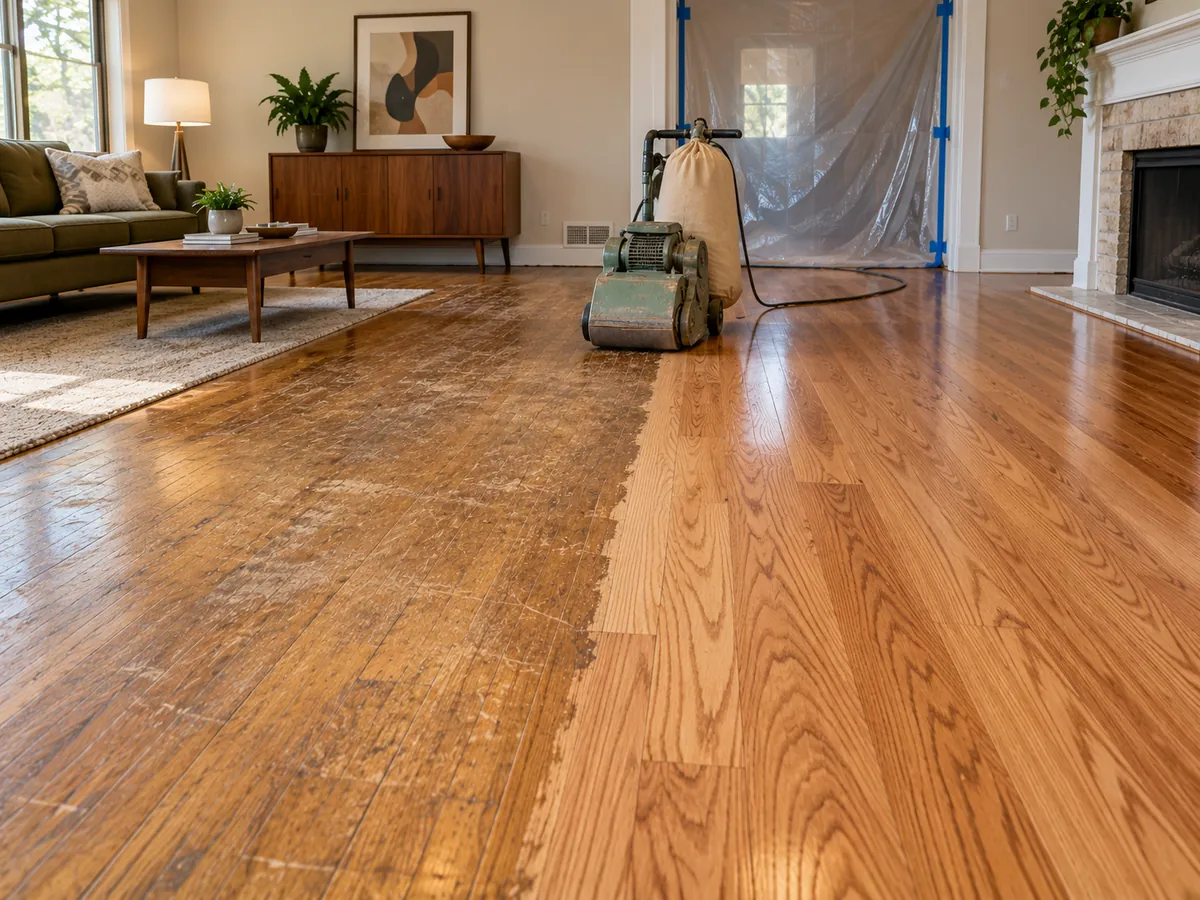
Refinishing Grand Prairie's Older and Newer Wood Floors
Grand Prairie grew almost overnight during World War II. The aircraft plant east of town drew so many workers that the population went from 1,595 in 1940 to about 18,000 by the end of the war, and the town counted 2,400 dwellings in 1945 (Texas State Historical Association). Growth kept going afterward, past 30,000 residents by 1960, and census estimates still count roughly 11,000 homes in the city built before 1970. Some houses from those years, near downtown and in areas annexed early, like Dalworth Park in 1943, have oak strip floors that have spent decades under carpet. Many can be sanded again, but a floor refinished two or three times already may have little wood left above the tongue.
The newer group looks different. Some homes built in the 2000s, in subdivisions such as Mira Lagos, came with wood floors, and twenty years of kids, dogs and sliding chairs show in the finish. If that floor is engineered, the wear layer decides the plan: about 2 mm or more can usually take a sanding, while a thin veneer can only be screened and recoated. We identify which one you have before anyone turns on a sander.