Family-owned, licensed & insured. Free in-home estimates in Arlington and nearby cities. Call (817) 555-0123

Offices, retail, restaurants & multifamily

Commercial Flooring in Arlington, TX

LVT, carpet tile, porcelain, concrete and rubber floors for Arlington businesses and rental properties, scheduled after hours or in phases so you stay open.

  • After-hours and phased installs
  • Slab moisture testing before any adhesive
  • ADA, slip resistance and sound ratings addressed
  • Free site walk and itemized bid

Family-owned · Licensed & insured, Lic. #238190 · Financing available

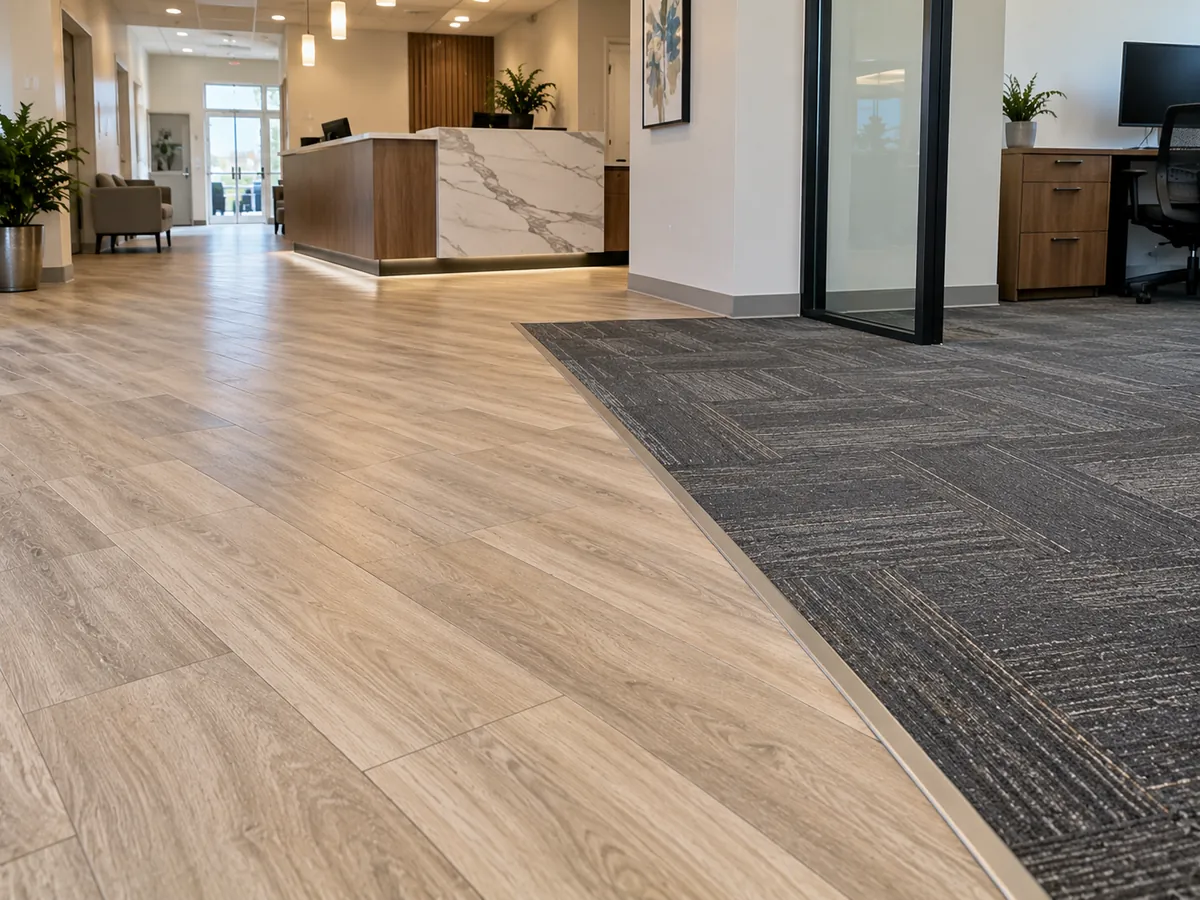
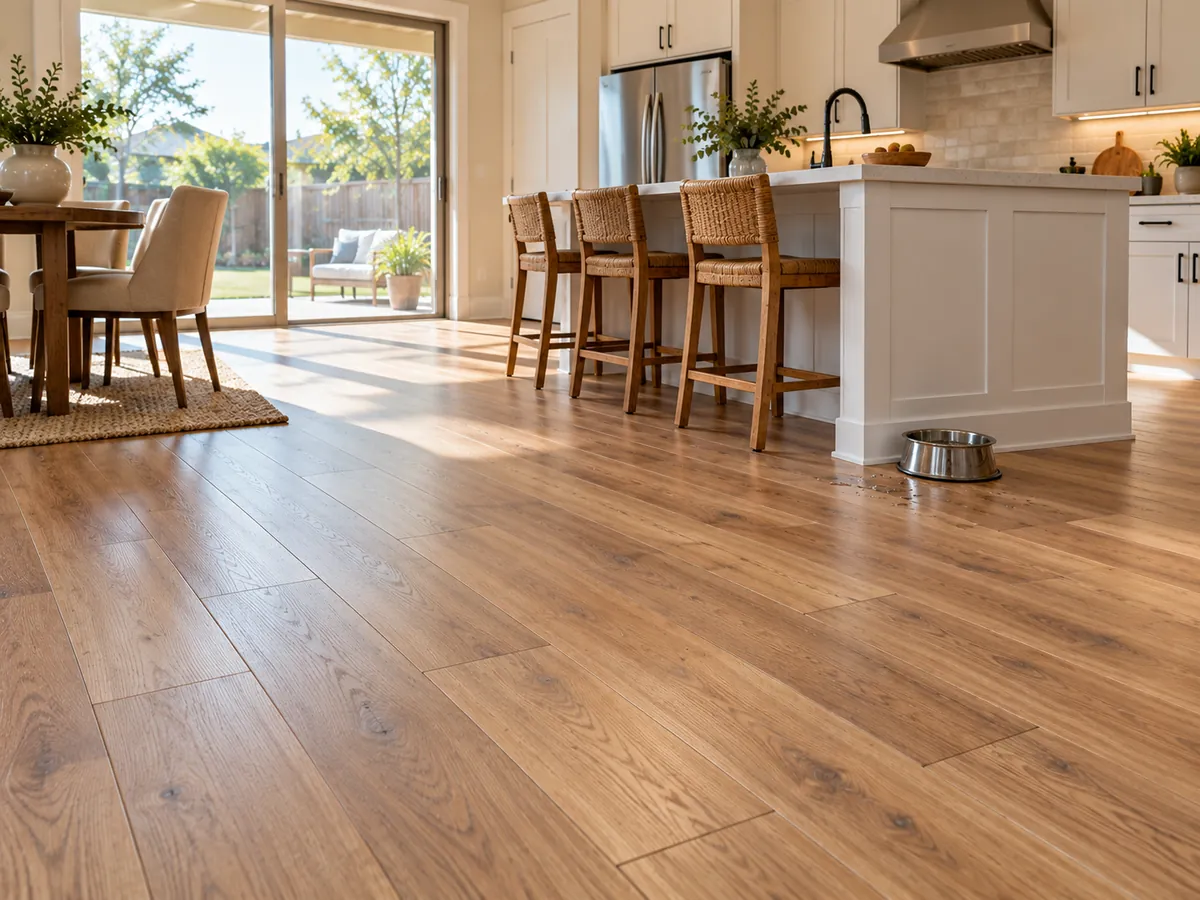
Commercial luxury vinyl tile and carpet tile installed in an Arlington, TX office suite

Commercial flooring in Arlington, TX has to go in without closing your doors for a week, and it has to meet requirements a house never deals with: ADA surface and threshold rules, slip resistance where floors get wet and sound ratings between apartments. We plan the work around your business hours and spell out product, prep and code items on the bid so you can compare it line by line.

We install floors for offices along I-20 and Cooper Street, restaurants and shops in the Entertainment District, medical and dental suites, and apartment communities near UT Arlington. The lineup includes glue-down LVT and LVP, carpet tile, porcelain tile, sealed concrete and rubber, and we test the slab before any adhesive goes down.

What's Included in a Commercial Flooring Project

Every commercial bid we write covers these items:

  • Site walk and schedule. We measure, note access and elevators, and agree on work hours and the order areas return to service.
  • Slab moisture testing by ASTM F2170 or ASTM F1869, checked against the adhesive and flooring makers' limits.
  • Asbestos check on old floors. Older vinyl tile and black mastic may contain asbestos, so suspect material is tested by an accredited lab before removal, as the EPA advises. Texas DSHS regulates asbestos work in the state.
  • Removal and disposal of carpet, VCT or tile (see old flooring removal).
  • Floor prep with dust control that meets the OSHA silica standard for construction (29 CFR 1926.1153), plus patching and self-leveling.
  • Installation to the manufacturer's instructions, and to CRI 104 for commercial carpet.
  • Transitions and edges that meet ADA level-change rules.
  • Closeout: punch list, labeled spare material for future repairs and care instructions for your cleaning crew.

Signs Your Commercial Floor Needs Replacing

Commercial floors usually get replaced for safety, tenant turnover or a failure that keeps getting worse. Watch for:

  • Lifted carpet tiles or frayed edges at entries and corridors, which are trip hazards.
  • LVT peeling or bubbling at the seams, often a sign of moisture coming up through the slab.
  • Cracked or loose tile in a kitchen or dining room, with grout that holds grease.
  • Slip complaints at wet entries, restrooms or service areas.
  • Noise complaints from residents below units that switched from carpet to hard flooring.
  • A new tenant, a rebrand or a suite combination that needs one consistent floor.

Our Commercial Installation Process

  1. Site walk. We meet the owner or property manager, measure and set work windows around your hours or event calendar.
  2. Test. Slab moisture and flatness are recorded, and older resilient flooring is sampled for asbestos if needed.
  3. Specify and bid. The bid lists product, adhesive, prep, phasing and any after-hours labor as separate lines.
  4. Prepare. Old flooring is removed, the slab is ground with dust control and leveled where needed. Major leveling falls under subfloor repair and leveling.
  5. Install by phase. Areas are finished and returned in the agreed order, with adhesive cure times respected before carts, chairs or rolling loads go back on the floor.
  6. Close out. We walk the punch list with you, leave spare material and go over the maintenance plan.

Commercial Floor Options and Code Requirements

The right floor depends on traffic, water, cleaning methods and noise. Here is how the common choices compare:

FloorStrengthsBest fit
LVT and glue-down LVPWater resistant, easy to clean, single planks can be replacedOffices, retail, medical suites and apartments
Carpet tileQuiet, damaged tiles swap out individuallyOffices, conference rooms and corridors
Porcelain tileAbsorbs 0.5% water or less, stands up to grease and harsh cleanersRestaurant kitchens, restrooms and lobbies
Sealed or polished concreteVery durable, no flooring to wear outWarehouses, showrooms and industrial-style retail
RubberCushioned, slip resistant and quietGyms, fitness studios and some clinical spaces

ADA: the 2010 ADA Standards require floor surfaces that are stable, firm and slip resistant (302.1), carpet pile no taller than 1/2 inch (302.2), and level changes no more than 1/4 inch vertical, or up to 1/2 inch if beveled no steeper than 1:2 (303). Slip resistance: a DCOF of 0.42 or higher is the ANSI A326.3 benchmark for level interior floors walked on when wet. Sound: IBC Section 1206 calls for STC 50 and IIC 50 (45 if field tested) between dwelling units. For tile-heavy spaces, see tile flooring installation.

What Affects the Cost of Commercial Flooring

Commercial bids vary more than residential ones. These are the main drivers:

  • Schedule. Night, weekend and phased work cost more labor than one open-site install.
  • Removal and disposal, including licensed abatement if old flooring tests positive for asbestos.
  • Slab prep: moisture mitigation, grinding and leveling.
  • Product and adhesive, including moisture-tolerant adhesives.
  • Sound underlayment for upper-floor apartments and condos.
  • Transitions and ramps needed to meet ADA level-change rules.
  • Access and logistics: elevators, parking, distance from the truck and furniture that must be moved.

Commercial Flooring Around Arlington's Entertainment District and UTA

Restaurants, bars and hotels near AT&T Stadium and Globe Life Field live by the event calendar, so a floor project there cannot eat a game weekend. We plan those jobs for the gaps between events and work overnight when needed. Office buildings along I-20 and Cooper Street usually prefer phased work, one suite or floor at a time over weekends. At apartment communities near UT Arlington, the work window is usually the gap between leases, and when hard flooring replaces carpet in an upstairs unit, a rated sound underlayment keeps the residents below from hearing every step.

Why choose us

Why Arlington Businesses and Property Managers Choose Us

0.42

minimum wet DCOF for level interior floors

Slip Resistance Specified, Not Guessed

Restaurant entries, restrooms and kitchens are where a pretty tile turns into a liability. We check each product's published DCOF against the ANSI A326.3 benchmark of 0.42 for level interior floors walked on when wet, and we look for a more aggressive surface where grease and standing water are part of the job. The ratings go on the bid, so you have a record of what was specified.
IIC 50

IBC 1206 impact sound rating between units

Sound Ratings for Multifamily Floors

Swapping carpet for vinyl plank in a second-floor apartment cuts turnover cleaning, but it can also generate noise complaints from the unit below. IBC Section 1206 sets STC 50 and IIC 50 for floor-ceiling assemblies between dwelling units, and many HOAs set their own minimums. We select a tested sound underlayment and flooring combination and give you the documentation for your files or the HOA board.

ASTM F2170

in-situ relative humidity slab test

Moisture Tested Before Anything Is Glued

Glue-down floors that bubble, curl or let go at the seams often trace back to moisture in the slab, and in a commercial space a failure means closing the area twice. We test with in-situ RH probes (ASTM F2170) or calcium chloride kits (ASTM F1869), compare results with the adhesive maker's limits and price a mitigation system up front when the numbers call for it.

Free estimate

Get a Free Commercial Flooring Estimate This Week

One call books your in-home measure, and you get a written, itemized quote after the visit.

(817) 555-0123

Mon to Fri 7 AM to 6 PM · Saturday 8 AM to 2 PM · Financing available

Our job-site standards

What Every Arlington Flooring Job Includes

No surprises on install day. These standards apply to every room we touch, from a single bathroom to a whole house.

  • Moisture readings, written down

    We test concrete slabs and wood subfloors before installation and record the numbers on your job sheet.

  • Flatness checked to spec

    We check the floor with a long straightedge and fix humps and dips to the flooring maker's tolerance.

  • Itemized, written quote

    Material, underlayment, prep, removal, trim and labor are listed line by line, so you can compare bids.

  • Protected home

    Floor protection on walkways, plastic dust barriers where we cut or sand, and doorways kept clear.

  • Clean job site daily

    Debris hauled out, tools stacked, and rooms left usable at the end of each workday.

  • Final walkthrough

    We walk every room with you, fix anything you flag, and leave labeled spare boards or tile for future repairs.

FAQ

Commercial Flooring FAQ

Can you install new flooring without closing our business?

In most cases, yes. We work nights or weekends, or split the space into phases so part of it stays open while we finish another section. Restaurants often have floors installed overnight between service days. We agree on the schedule and the order areas return to use before work starts.

What flooring meets ADA requirements?

Most commercial floors can, if installed correctly. The 2010 ADA Standards require stable, firm, slip-resistant surfaces, carpet pile of 1/2 inch or less that is securely attached, and level changes kept to 1/4 inch vertical or beveled up to 1/2 inch. Transitions are where most problems happen.

Our building has old vinyl tile. Could it contain asbestos?

It might. The EPA notes that older vinyl floor tiles and some adhesives, including black mastic, may contain asbestos. Do not sand, scrape or break it. We have suspect material tested by an accredited lab first, and if it is positive, a licensed abatement contractor removes it before we start.

Is LVT or carpet tile better for an office?

Carpet tile is quieter and works well in open offices and conference rooms. LVT is easier to clean and better for break rooms, entries and anywhere with rolling chairs or spills. Many offices use both, with a flush transition between them so there is no trip edge.

Ready to Start Your Commercial Flooring Project?

Call for a free in-home estimate. We measure, test the subfloor and leave you a written quote.

Call (817) 555-0123

Mon to Fri 7 AM to 6 PM · Saturday 8 AM to 2 PM · Licensed & insured, Lic. #238190

Call Now Free Estimate
(817) 555-0123