Family-owned, licensed & insured. Free in-home estimates in Arlington and nearby cities. Call (817) 555-0123

After leaks, slab leaks & burst pipes

Water-Damaged Floor Replacement in Arlington, TX

Assessment, removal and new flooring after a leak, slab leak, appliance failure or burst pipe, coordinated with your insurance adjuster and the drying company.

  • Flooring assessed for what can be saved
  • Moisture readings before any new floor goes in
  • Itemized scope your adjuster can review
  • Free in-home assessment and written quote

Family-owned · Licensed & insured, Lic. #238190 · Financing available

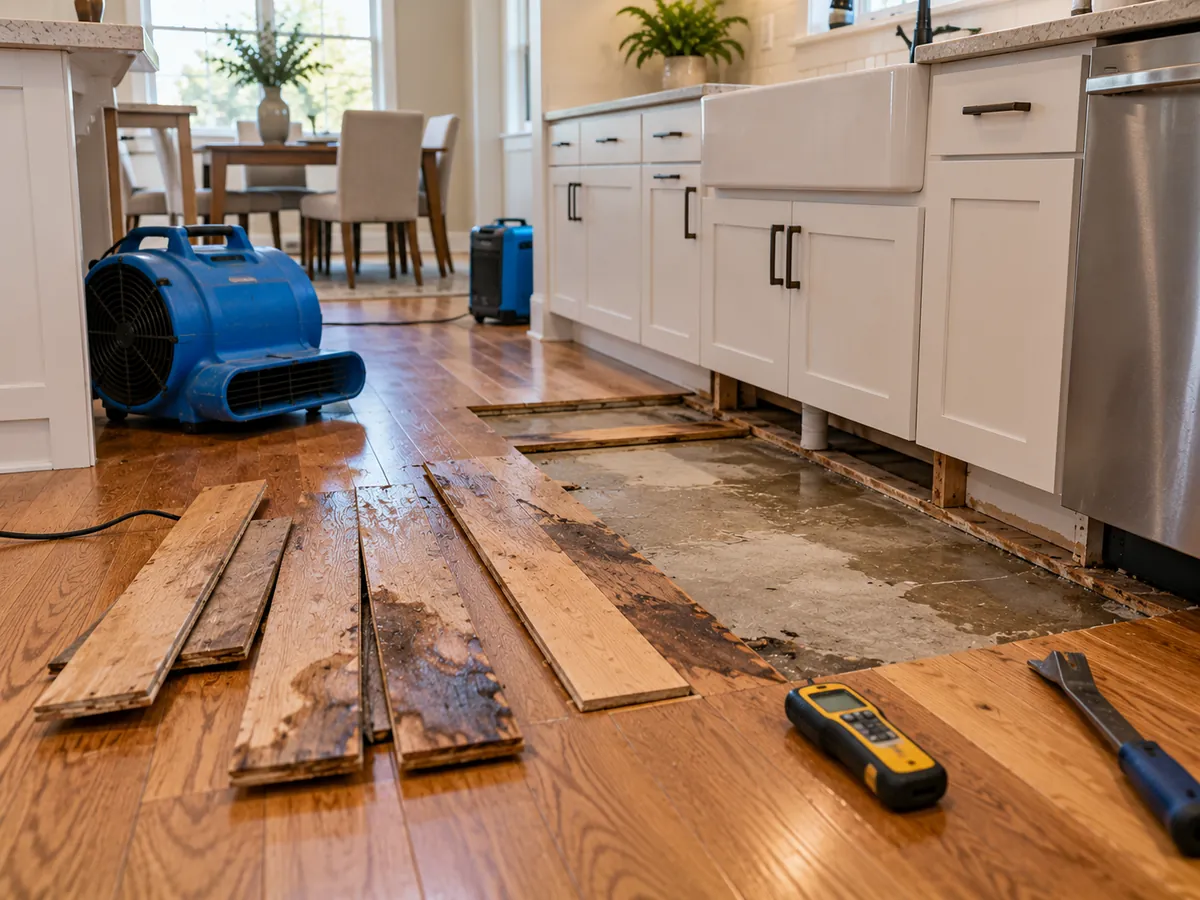
New plank flooring installed during water-damaged floor replacement in an Arlington, TX kitchen

Water-damaged floor replacement in Arlington, TX usually starts a few days after the worst of it, once the water is shut off, the extraction crew has come and gone and the drying fans are running. That is where we come in. We are not a water extraction or drying company. We assess what the water did to your flooring, remove what cannot be saved, confirm the slab or subfloor is dry and install new flooring.

Floors get wet here in plenty of ways: a refrigerator supply line, a failed water heater, a dishwasher that leaks quietly for weeks, a slab leak or a pipe that bursts in a hard freeze. We work alongside your insurance adjuster and the restoration company, so the floor work is documented, priced line by line and done in the right order.

What's Included in Water-Damaged Floor Replacement

Our part of a water loss covers the flooring from first assessment to final trim:

  • Floor assessment of each affected room: flooring type, how far the water traveled and whether boards are cupped, swollen or separating.
  • Moisture readings in the flooring and the slab or subfloor, recorded for your adjuster and the drying company.
  • Photos and an itemized scope of what needs to come out and what can stay.
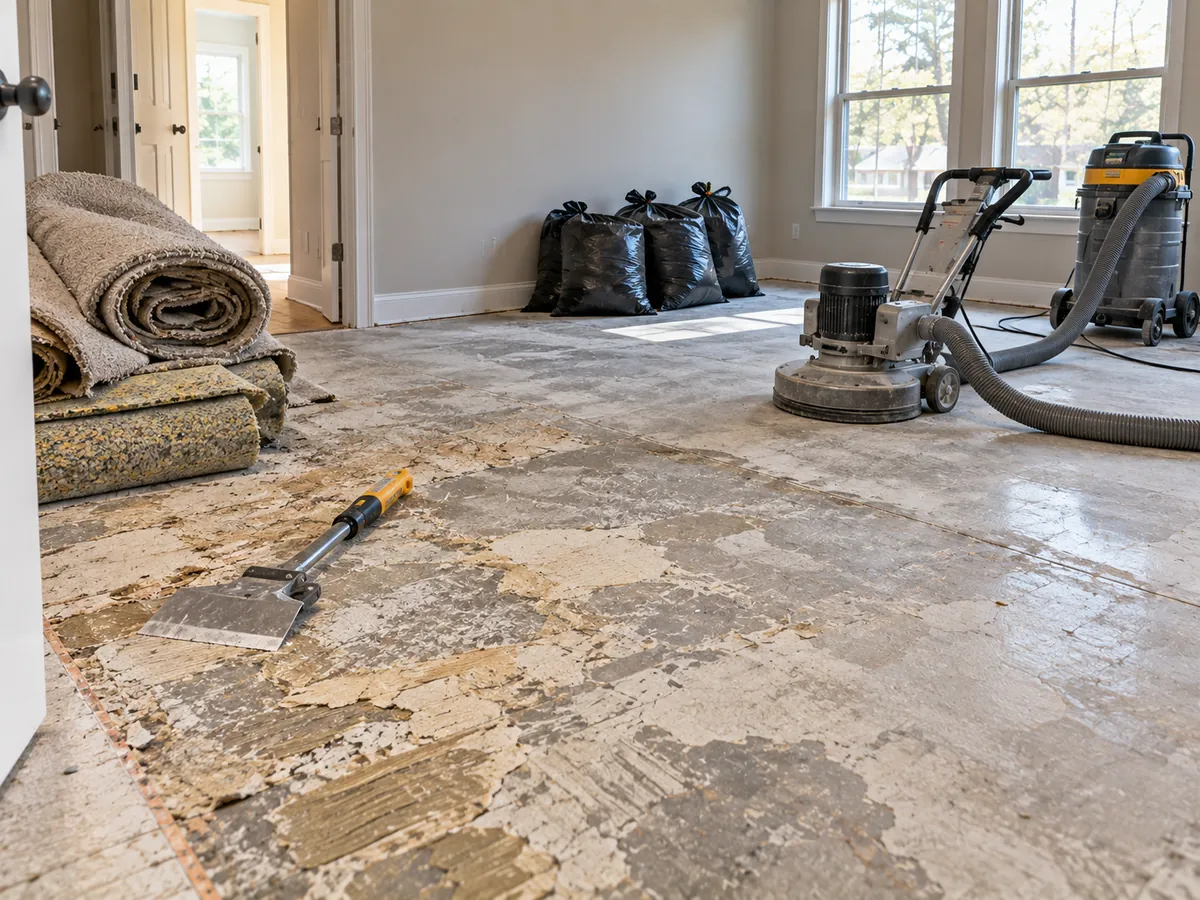
  • Removal of any damaged flooring, pad and underlayment the restoration crew did not already take out.
  • Subfloor repair where plywood has delaminated or a slab needs patching (see subfloor repair and leveling).
  • Matching or replacing the floor, including weaving new boards into undamaged areas when the product is still made.
  • Installation, trim and transitions, with new baseboard where the old trim wicked up water.

Signs Water Has Damaged Your Floors

Water does not always show itself right away, especially under a floating floor. Watch for:

  • Cupping or crowning in hardwood, where board edges sit higher than the centers, or the reverse.
  • Swollen laminate seams that look peaked or feel rough underfoot.
  • Vinyl planks that lift, separate or feel spongy, a sign water got underneath.
  • A musty smell or dark staining at baseboards, around the dishwasher or near the water heater.
  • Warm spots on a slab floor, an unusually high water bill or running water you hear with every fixture off, all common slab leak signs.
  • Loose or hollow tile, and grout that stays dark long after mopping.

How We Replace Water-Damaged Floors

  1. Stop the source and start drying. Shut off the water and call your insurer and a restoration company. The EPA advises drying water-damaged areas and materials within 24 to 48 hours to prevent mold growth.
  2. Assess the floor. We note the flooring type, the water category the restorer assigned under IICRC S500 and how long the floor stayed wet, then mark what can be dried and what has to go.
  3. Write the scope. You and your adjuster get an itemized scope for removal, subfloor repair and new flooring, and we can meet the adjuster on site.
  4. Confirm the floor is dry. No new flooring goes in until slab or subfloor readings are within the flooring maker's limits, and for wood, within the NWFA moisture difference between flooring and subfloor.
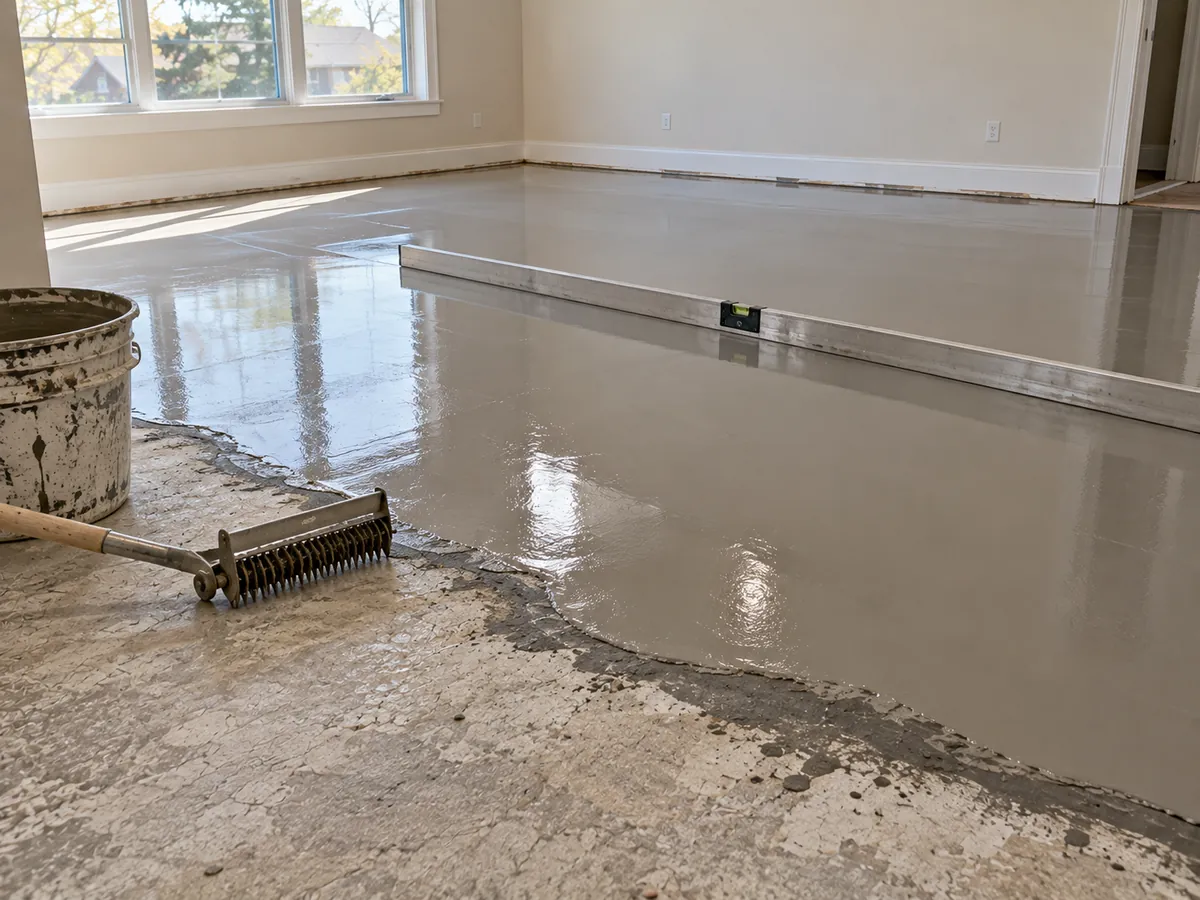
  5. Repair and prepare. We replace damaged plywood and patch any area where a plumber opened the slab to fix a leak.
  6. Install and trim, matching the surrounding rooms as closely as the product allows.

Can Your Wet Floor Be Saved?

That depends on the flooring, the water and how long it sat. IICRC S500 groups water as Category 1 (clean, such as a broken supply line), Category 2 (gray, such as dishwasher or washing machine discharge) and Category 3 (black, such as sewage or floodwater). With Category 3 water, porous flooring and pad generally have to be removed, and clean water can slip into a worse category the longer it sits.

Flooring typeCan it be dried and saved?Typical outcome
Solid hardwoodSometimes, with clean water and fast dryingCupping may relax as it dries; then sand and refinish or replace sections
Engineered hardwoodRarelyLayers can swell or separate; affected areas are usually replaced
LaminateAlmost neverThe fiberboard core swells at the seams and stays swollen; replace
Luxury vinyl plankOften, if it is a floating click floorPlanks are lifted so the slab can dry, then reinstalled if undamaged
Carpet and padSometimes, with Category 1 water caught earlyPad is often replaced; with Category 3 water, both come out
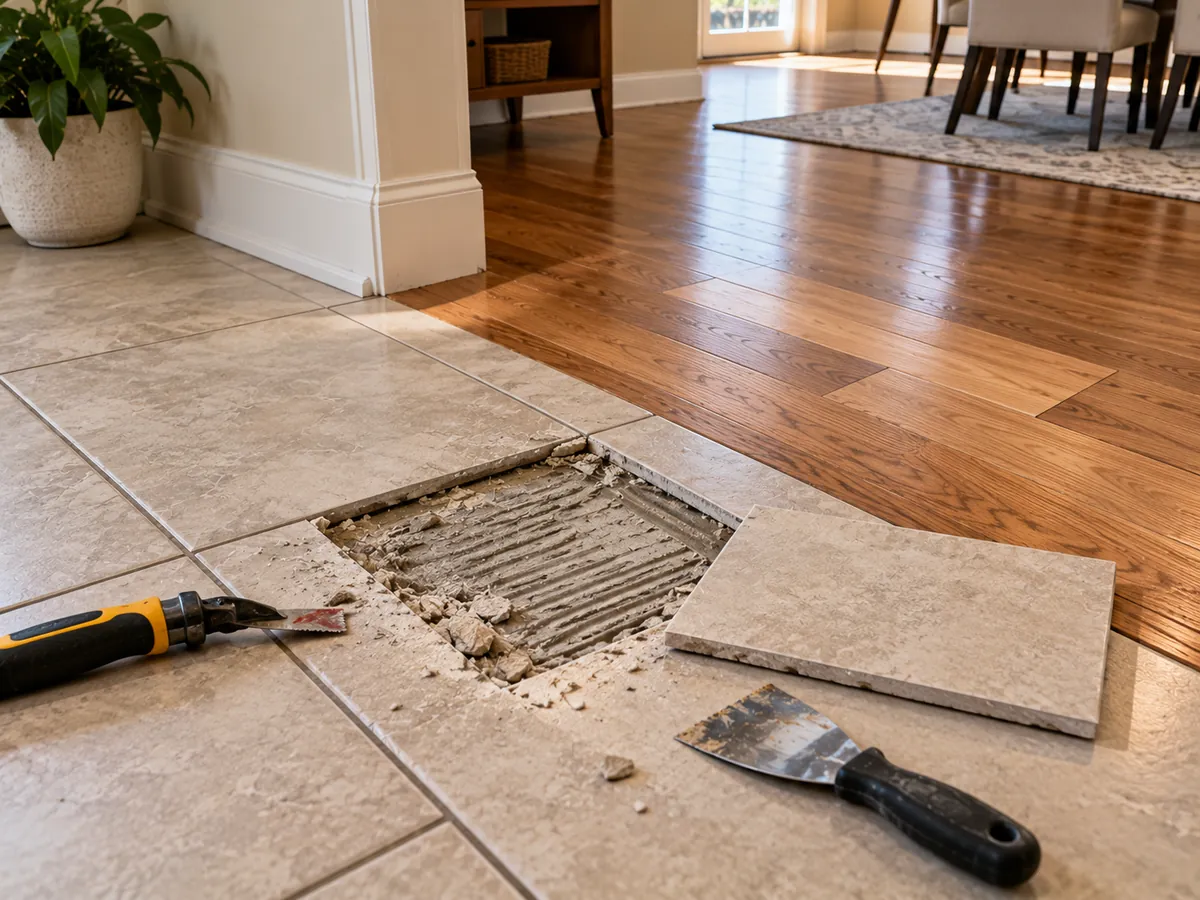
Ceramic or porcelain tileUsuallyTile survives; check for loose tile, cracked grout and a wet wood subfloor

Matching is the other challenge. Flooring lines get discontinued, and new boards may not match old ones that have aged in the sun, so sometimes the cleanest answer is replacing a whole connected area. For a smaller patch, our floor repair service covers board and plank replacement.

What Affects the Cost of Replacing Water-Damaged Floors

Water losses vary a lot, so the quote is built room by room from these factors:

  • Area affected, and whether the floor runs continuously into rooms the water never reached.
  • Flooring type and match. A discontinued product can mean replacing more floor than was damaged.
  • Removal, since wet tile, glued wood and saturated pad take different amounts of labor.
  • Subfloor condition, such as delaminated plywood or a slab opened for a leak repair.
  • Water category, since Category 2 and 3 losses can require removing more material.
  • Refinishing, if saved hardwood needs sanding to flatten cupping or blend in new boards.

On an insurance claim, the adjuster decides what the policy covers. We give you and the adjuster the same detailed scope, so everyone works from one set of numbers.

Burst Pipes and Slab Leaks in Arlington Homes

Arlington homeowners saw what a hard freeze can do in February 2021, when Winter Storm Uri burst pipes across North Texas and left water-damaged floors in house after house. Freezes like that are rare here. Slab leaks are a more constant risk. The same clay soil that heaves and settles under Arlington foundations puts stress on the water lines running through and under the slab, and a pinhole leak can soak the floor above for a long time before anyone notices. When a plumber breaks open the slab to repair a line, we patch that area flat and test it for moisture before new flooring covers it.

Why choose us

Why Arlington Homeowners Call Us After a Leak

24-48 hrs

EPA window for drying wet materials

We Know Our Place in the Order of Work

The EPA advises drying water-damaged areas within 24 to 48 hours to prevent mold, and that job belongs to a restoration company with extraction equipment and dehumidifiers, not to a flooring installer. We step in once drying is underway or finished, coordinate with the drying crew on what comes out, then take over subfloor repair and new flooring, so nobody installs a floor over a slab that is still wet.
S500

IICRC water damage restoration standard

Decisions Based on Water Category

Whether a floor can be saved depends heavily on what kind of water it took. IICRC S500 sorts water into Category 1 clean, Category 2 gray and Category 3 black, and Category 3 generally means porous flooring and pad must be removed. We read the restorer's category call and moisture logs, then recommend drying, refinishing or replacement room by room. We do not push a full replacement when a dried floor can be saved.

4%

NWFA max flooring-to-subfloor difference, strip under 3 in.

Wood Gets Time to Settle Before Sanding

Cupped hardwood often flattens on its own as it dries. Sand it too soon and the floor can crown once the last of the moisture leaves, with board centers ending up higher than the edges. We wait until the wet boards read close to dry areas of the same floor and the wood and subfloor are back within the NWFA installation limits (no more than 4% apart for strip under 3 inches wide, 2% for wider planks) before we sand, refinish or weave in new boards.

Free estimate

Get a Free Water-Damaged Floor Replacement Estimate This Week

One call books your in-home measure, and you get a written, itemized quote after the visit.

(817) 555-0123

Mon to Fri 7 AM to 6 PM · Saturday 8 AM to 2 PM · Financing available

Our job-site standards

What Every Arlington Flooring Job Includes

No surprises on install day. These standards apply to every room we touch, from a single bathroom to a whole house.

  • Moisture readings, written down

    We test concrete slabs and wood subfloors before installation and record the numbers on your job sheet.

  • Flatness checked to spec

    We check the floor with a long straightedge and fix humps and dips to the flooring maker's tolerance.

  • Itemized, written quote

    Material, underlayment, prep, removal, trim and labor are listed line by line, so you can compare bids.

  • Protected home

    Floor protection on walkways, plastic dust barriers where we cut or sand, and doorways kept clear.

  • Clean job site daily

    Debris hauled out, tools stacked, and rooms left usable at the end of each workday.

  • Final walkthrough

    We walk every room with you, fix anything you flag, and leave labeled spare boards or tile for future repairs.

FAQ

Water-Damaged Floor Replacement FAQ

Do you do water extraction and drying?

No. Extraction and structural drying belong to a restoration company with the right equipment, and the EPA advises drying wet materials within 24 to 48 hours. We come in once drying is underway or done, remove flooring that cannot be saved and install the new floor once readings confirm it is ready.

Can hardwood floors be saved after a leak?

Sometimes. Solid hardwood that took clean water and was dried quickly can often flatten back out and be refinished. Engineered hardwood is harder to save because its layers can swell or separate. We take moisture readings and let the wood stabilize before choosing between refinishing and replacement.

Will my homeowner's insurance cover water-damaged floors?

That depends on your policy and the cause, and only your insurer can decide coverage. A sudden burst pipe is often treated differently from a slow, long-term leak. We give you and your adjuster an itemized scope with photos and moisture readings so the claim is clearly documented.

How long after a leak can new flooring be installed?

Once the slab or subfloor tests dry to the flooring maker's limits. A small clean-water leak caught quickly may dry within days, while a slab leak or large loss can take longer. Installing over a damp slab risks mold and a failed floor, so we test before scheduling.

What happens to my floor if I have a slab leak?

A plumber locates the leak and either opens the slab to repair the line or reroutes it. Flooring over the leak and in the wet area often has to come up. After the repair, we patch the opened concrete flat, confirm the slab is dry and install flooring that blends with the room.

Ready to Start Your Water-Damaged Floor Replacement Project?

Call for a free in-home estimate. We measure, test the subfloor and leave you a written quote.

Call (817) 555-0123

Mon to Fri 7 AM to 6 PM · Saturday 8 AM to 2 PM · Licensed & insured, Lic. #238190

Call Now Free Estimate
(817) 555-0123