Tile Over Kennedale's Slabs, Old and New
Kennedale sits on low rolling hills about ten miles southeast of downtown Fort Worth, with Village Creek winding through town (City of Kennedale). Like much of North Texas, the ground here is expansive clay, which takes on water and heaves in wet seasons and pulls back in dry ones, and slabs ride along. The 1980s were a busy decade for building in Kennedale: census estimates count about 760 homes from those years, more than a fifth of the city's housing. Forty years of that movement usually leaves a mark, so we expect to find hairline cracks or a patched trench from old plumbing work when the floor covering comes off.
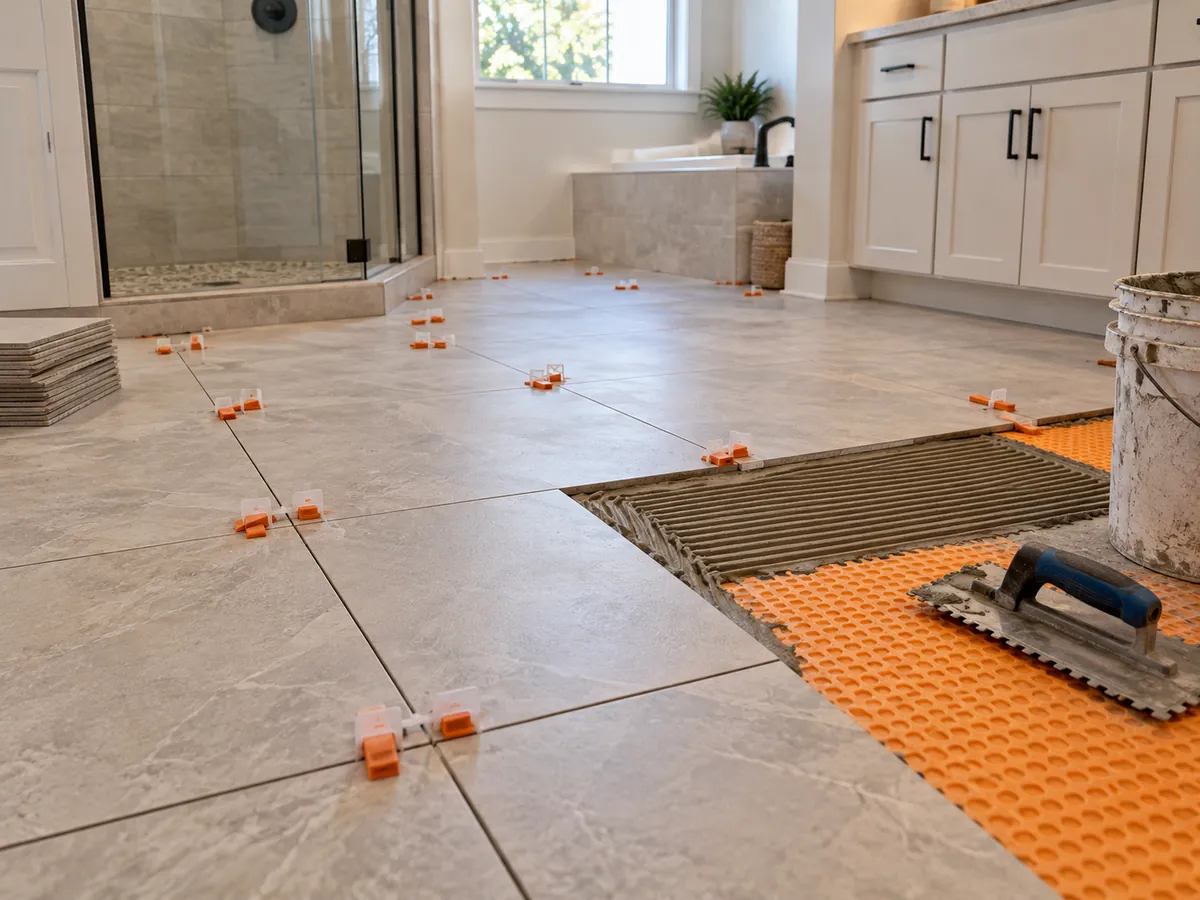
Newer houses raise a different question. Open kitchen and living areas are common in homes built since 2000, and when a tile floor runs more than 20 to 25 feet in one direction, the TCNA method calls for soft movement joints in the field, not only at the walls. We plan those joints before setting, along with crack isolation over stable cracks and an uncoupling membrane where a slab shows signs of movement. Offset or growing cracks are a foundation question rather than a tile question, and we say so before setting anything.