Tile in Hurst Homes From the 1960s and 1970s
The 1970s were Hurst's busiest building decade. Census estimates count about 3,700 homes from those years and another 3,400 from the 1960s, together more than 40 percent of the city's housing (American Community Survey, 2020 to 2024). Many of those houses have had their kitchens and bathrooms redone at least once, so a tile job here often means removing one or two earlier floors before we can see the concrete.
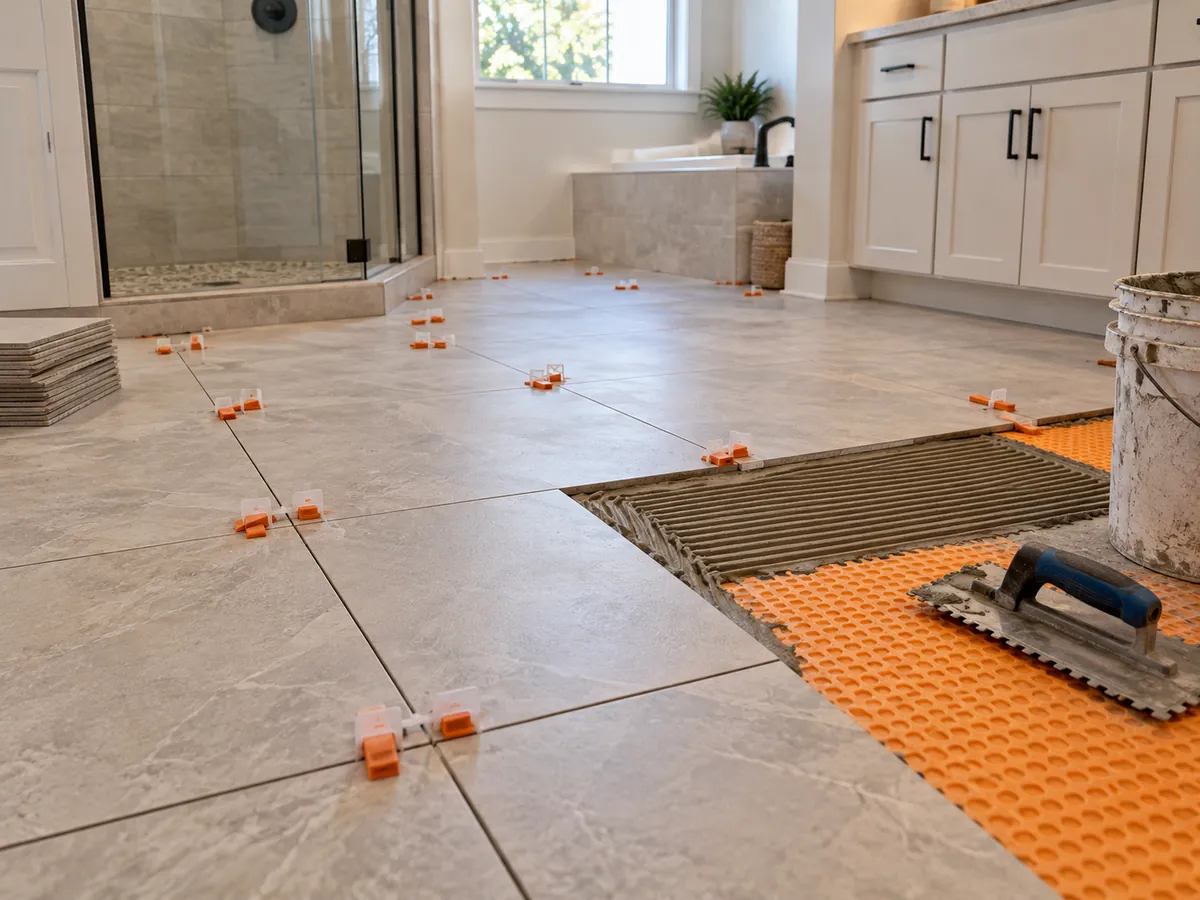
Once the slab is bare, we look for what half a century on North Texas clay tends to leave behind: hairline cracks, a crack running from the corner of a doorway, a ridge where part of the slab has lifted and patches where a plumber opened the floor. Each one gets mapped. Stable hairline cracks get a crack isolation or uncoupling membrane. Wider cracks, or ones that keep opening or step up on one side, get a foundation check before any tile is set. Large porcelain needs a flatter slab than the smaller tile common in older homes, so we price grinding and leveling in the quote instead of adding them later. If old vinyl or black adhesive turns up under a tile layer, we stop and recommend asbestos testing before it is broken up.